Showing posts with label bread flour. Show all posts

Pumpkin Pizza Dough

>> Tuesday, February 3, 2015

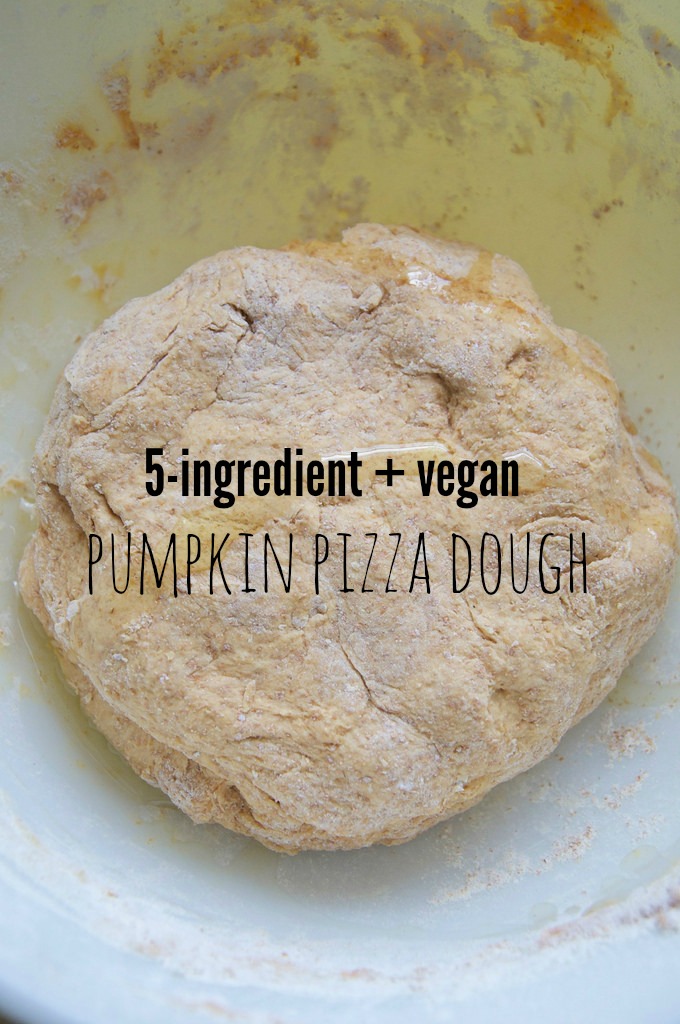
I’ve been making pumpkin pizza crust for years. So long, in fact, that my favorite recipe has changed from this first time I posted it in 2010. If you make pizza often from home (like we do), this crust will help health it up a bit. It’s also way tastier than plain pizza crust. And you can use it for far more than just pies. Think garlic knots, rolls, calzones, etc.

All with this simple 5-ingredient recipe.

And don’t miss the secret below!


PUMPKIN PIZZA DOUGH


What you'll need . . .
  • 1 cup warm water
  • 2-1/4 teaspoons active dry yeast
  • 2 tablespoon pure maple syrup
  • 3 tablespoons olive oil
  • 1/2 cup canned pumpkin
  • 3-1/2 cups unbleached bread flour*
  • 1-1/2 teaspoons coarse kosher salt
* These days I often do a mix of half bread flour, half whole wheat flour. It gives the crust a hearty texture. Sometimes I’ll roll in a little cornmeal before baking, too.

Method . . . 
  1. In a small bowl, whisk together your warm water and active dry yeast. Let sit until frothy -- around 5-10 minutes. Pour in the maple syrup, olive oil, and pumpkin puree and mix again.
  2. In a large bowl, combine 3 cups of flour with your salt. Create a small well in the center using your fist.
  3. Pour your wet ingredients into the well and use a spatula to bring everything together. When you can no longer mix that way, use your hands to knead -- adding the final 1/2+ cup of flour until you form an elastic dough.
  4. Return dough to the large bowl and drizzle with more olive oil. Cover with plastic wrap or a wet tea towel and let rise for 2 hours, until doubled in size.

RECIPES


Oven Baked Pizza:

This method is a little different from what you might be used to. Now, the recipe yields enough dough for two large pizzas. We bake ours on a pizza stone by preheating the oven (with stone inside) to 450-500 degrees F.  When we’re ready to bake, we take the stone out of the oven, place the crust on top and spread with sauce, sprinkle with cheese, etc. Before placing the pizza back in the oven, we turn it to broil and then broil the pizza on the middle rack for 7-10 minutes, until browned and bubbly.

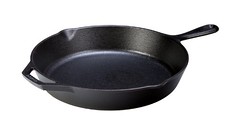
Seriously, if you bake pizza at home and don’t have a stone, pick one up! (This one costs a little over $16) We’ve been using the same one since we got married in 2007. We do our pizza on it, of course, but also most of our baking of garlic knots, biscuits, sweet potato fries, etc. I feel like I could dedicate a whole post to the pizza stone, and maybe I will.

You can also use this dough in these recipes:

Pumpkin Garlic Knots
Pumpkin Pesto Rolls -- my personal favorite
Brie-Stuffed Pumpkin Pesto Rolls
Gourmet Grilled Pizza
Homemade DP Dough Calzone


THE SECRET


And here’s the coolest part about this recipe: You can basically substitute in ANY kind of puree in for the pumpkin. Trust me and try it. I’ve made Beet Pizza Dough, Pesto Pizza Dough, and even Garbanzo Pizza Dough -- all by using similar ratios + this recipe as a jumping off point.

Have you tried pumpkin pizza dough? 

Like what you just read? You can subscribe to the feed of these posts or follow us on Twitter or Facebook to be the first to know what the (never home)makers are up to. And we’ll love you forever!

Read more...

Sourdough Soft Pretzels

>> Thursday, January 31, 2013


Quirk // I write many of my recipes on the backs of unopened junk mail.


It's a strange habit that started in college and it's stuck to this day, apparently. I need to invest in some composition books or something. Oh, and my writing instruments of choice range from markers and crayons to sharpies and Stephen's red grading pens. Whatever is around and not out of ink.

All that sloppy scratching =


SOURDOUGH SOFT PRETZELS
 Makes 4 >> vegan << pretzels

What you'll need . . . 

  • 1/2 cup sourdough starter (straight from the fridge) 
  • 1/3 cup low sodium veggie juice (I used R.W. Knudsun's Very Veggie)***
  • 1 tablespoon olive oil
  • 1 teaspoon apple cider vinegar
  • 1 teaspoon active dry yeast
  • 1-1/2 cups bread flour
  • 1 tablespoons flax meal
  • 2 tablespoons nutritional yeast
  • pinch salt
  • rosemary + paprika, to taste (optional)
*** You can also use water, I'm sure of it.


Method . . . 

  1. Easy enough: Toss all wet ingredients into a large bowl followed by the dry ingredients.
  2. Mix together using a spoon, then work into kneading with your hands, adding extra flour if necessary. Form a smooth, elastic ball.
  3. Put a bit of olive oil in the bowl and cover with plastic wrap overnight (or 8 to 10 hours should do it).
  4. Preheat your oven to 450 degrees F. Lightly grease a baking sheet and set aside.
  5. Divide dough into 4 equal portions. Then, on a slightly oiled surface (I used a large plate) roll out into a long snake. Shape into a pretzel, as per these instructions from another recipe.
  6. Fill a large stock pot with water and bring to a raging boil. Then place the pretzels in one by one (or two by two, if you're comfortable) and keep submerged for about 30 seconds (they will begin to float).
  7. Repeat with the other two pretzels. Then sprinkle with coarse salt (and more paprika, if you like).
  8. Bake for 5 minutes. Then lower the oven temperature to 350 degrees F and bake for another 10 to 15 minutes, until golden.

I've been making a lot of stuff with my sourdough starter. Honestly, I didn't know there were so many uses for it. Bagels, pretzels, pancakes, waffles, just to name a few. My favorite creation has to be the basic sourdough loaf, though.

I've also noticed a gigantic difference in taste, sourness, with letting things rise overnight versus just a few hours. It's well, well, well worth the wait, whenever possible.

And I took your advice and bought a non-Le Creuset dutch oven. Got it -- a Wolfgang Puck, 5.6 qt -- at TJ Max on clearance for $39. THIRTY NINE DOLLARS. As in, at least $100 under what I thought I needed to spend.


You'll be getting good use this weekend, my friend.

Like what you just read? You can subscribe to the feed of these posts or follow us on Twitter or Facebook to be the first to know what the (never home)makers are up to. And we’ll love you forever!

Read more...

Our Recipes: Breads, Biscuits, and Knots

>> Saturday, February 26, 2011


BREADS, BISCUITS, and KNOTS:
* means VEGAN

BACK TO ALL RECIPES >>>

OR BROWSE BY CATEGORY:
GRANOLA & OATS PANCAKES, ETC. SMOOTHIES
SPREAD, SAUCES, DIPS SALADS SOUPS & STEWS
SNACKS & STARTERS SANDWICHES & BURGERS PIZZA, ETC.
STIR-FRIES, ETC. OTHER MEALS BREADS
CAKES & CUPCAKES COOKIES & BROWNIES PIES & TARTS
ICE CREAM & PUDDING DRINKS CONVERSIONS
Like what you just read? You can subscribe to the feed of these posts or follow us on Twitter or Facebook to be the first to know what the (never home)makers are up to. And we’ll love you forever!

Read more...

White-Whole Wheat No-Knead Loaf

>> Wednesday, September 22, 2010


Before we get to the bread, I'm happy to announce that we have FINALLY published our text-only Recipe Index. You can browse by recipe type without having to go to Flickr and then return back to our site. It's SO MUCH EASIER to use . . . even WE're benefiting from being able to find our favorite recipes fast. Please be patient while we input the dietary information (mostly just noting if a recipe is vegan).

However, it's important to note that all recipes are vegetarian. Most baked goods are vegan, even if their title doesn't suggest so. And in many of our recipes, we provide vegan substitutions if they aren't already free of dairy, etc.

So, please check out the new Recipe Index (it's also in the tabs at the top of the page). And please let us know what you think.


Bread baking is something I am planning to do a whole lot more of as I get more time after marathon training. I'm getting closer to perfecting the crust on crusty no-knead breads. The trick is truly waiting for 18 (or a full 24) hours before touching the dough. It's difficult to wait . . . but to help, I usually mix everything together before bed. That way, there's at least 8 hours where it's untouched. Then, I'm so busy getting ready for work in the morning that another 9 hours goes by . . . when I return home, I run . . . so, another hour.

So, if you are as inpatient as I am, give my method a try. This recipe yields a large (or two small) white-whole wheat loaves perfect for anything from toasting in the morning to dunking into chili at night. I've had several people ask if a cast iron dutch oven is necessary. It's not, however you will need a covered pot of cast iron (or glass/Pyrex, etc.) to create the ideal hot and humid baking conditions. The conditions necessary for the best bakery-esque crust.

The dutch oven I have is pictured in the first no-knead recipe I posted back last winter. Mine is cast iron and actually a half the size of the the standard, but it works wonderfully. Use what you have. Consider investing later if you find you just love making bread.


WHITE-WHOLE WHEAT NO-KNEAD LOAF

What you'll need . . .
  • 1/4 teaspoon active dry yeast
  • 1-1/2 cups warm water
  • 1 cup whole wheat flour
  • 2 cups unbleached bread flour
  • 1-1/2 teaspoons salt

Method . . .
  1. In a large bowl, dissolve the yeast in the warm water. I simply let mine sit for five minutes, then whisked lightly.
  2. Add in the flours and salt. Stir or lightly knead with you hands (though, the dough will be very sticky).
  3. Then, cover the bowl with a piece of plastic wrap and let rise for 18 to 24 hours. The longer the better. I put the bowl in our microwave and waited about 20 hours before going on.
  4. After you've finished waiting . . . lightly flour a clean work surface and scrape the dough out onto it. Gently knead and shape into a ball (if you're using a small dutch oven, you can divide the dough into 2 and shape into 2 balls -- that's what I did).
  5. Then put the dough (seam side down) on a baking sheet dusted with more flour (or cornmeal works best -- I didn't have any). Cover with a piece of lightly oiled plastic wrap and let rise for between 1 to 2 hours. (You'll know it's ready when the ball has doubled in size.)
  6. Preheat your oven to 475 degrees F with you dutch oven in there, preheating as well. When it's ready, use you pot holders (one time, I honestly forgot an burned my hand!) to take the dutch oven out . . . and then toss in your loaf.
  7. Cover. Return to oven. And bake for 30 minutes. If you are using a smaller dutch oven and make two loaves, simply repeat this process. Let loaves cool on a wire rack.
(An anonymous commenter has requested we credit Jim Lachey, Sullivan Street Bakery, for his original recipe [the one that appeared in the NY Times several years ago]. Though our version wasn't conscious copied, instead -- acquired [and then tinkered with] during the whole blog world recipe explosion that resulted out of his genius -- the no-knead method was crafted by him.)


This bread is wonderful straight out of the oven. The crust is incredible. If you wait overnight, the crust will soften, but then get its crisp back if you toast it. I recommend topping with some homemade peanut butter.

D.I.V.I.N.E.


Have you ever baked a no-knead loaf? Or do you regularly bake your own breads? We'd love tips and/or your favorite recipes. Of all cooking/baking processes, making bread is my favorite. Not only because I love to eat bread, but also because I'm continually surprised by how my loaves turn out. Just leave a comment or email us at neverhomemaker [at] gmail [dot] com.

Like what you just read? You can subscribe to the feed of these posts or follow us on Twitter or Facebook to be the first to know what the (never home)makers are up to. And we’ll love you forever!

Read more...

Common Flour Types: Demystified

>> Tuesday, September 14, 2010


Justine writes:

Hey, Ashley and Stephen! I'm getting ready to try your vegan challah recipe, and I guess before I start, I have a question: Do I need to use the two different flours you have in the recipe, or could I use all regular bread flour? I'm confused about all the different kinds and what they are used for. Thanks!"

Great question, Justine! We're definitely not experts, but through our baking adventures, we've become familiar with various types of flours and their "best" uses. We've come up with this quick guide to help you distinguish between the 5 kinds we use most often in our recipes . . .
  • Wheat Pastry Flour is likely familiar to you all. We make a lot of cookies, cakes, brownies, and other dessert-y (and breakfast-y) items . . . and in most of those recipes we either totally or partially use the stuff. Wheat pastry flour is just a light form of whole wheat flour made -- here's that word again -- lighter for fluffier results. I like using wheat pastry flour instead of regular pastry (or white) flour because it add nutrition to baked goods. A slight heartiness, along with fiber, vitamins and minerals and other heart-healthy goodness.
  • Wheat Flour is something we mostly use when baking bread. If we want to add all that goodness we listed above (instead of simple bulk that white bread flour provides), we mix in some wheat flour with unbleached bread flour. It adds extra texture, weight, and protein as well. Again, our use of this type is mostly for health reasons.
  • Bread Flour is great for yeasted baked goods (like breads and pizza crusts, etc.), and though we very much like the health benefits of wheat (and even whole wheat bread flour), there's just something about the white stuff that has us coming back again and again. Bread flour has a high gluten content, which is essential to the bread baking process. Even if you're making a "wheat" bread a little unbleached will do your recipe some good -- it allows the yeast to rise to its highest.
  • All-Purpose Flour is really just as the name suggests: it's for all purposes. It's a good type to have around in a pinch because you can use it for cookies, breads, and -- again -- pretty much anything if you need to (think thickening agent in sauces, soups, etc.). It's made from a blend of both high- and low-gluten flours . . . so if you use it to make, say, bread -- be prepared, because it won't necessarily be prize-winning (you're using a more general ingredient than a specific one, if that makes sense).
  • Coconut Flour is something we use on occasion, mostly in cookies and other baked goods. Though we've also used it to thicken soups. It's gluten-free, which is attractive to those of you who have restricted diets, and is full of dietary fiber. We're trying to learn about using gluten-free flours in baking -- so if you're at all interested in guest posting on this topic, we'd like to find out more (just email us).

Bleached versus unbleached? Unbleached flour is not treated with any color changers (i.e. BAD stuff like peroxides, dioxides, and chlorine). It is more a cream color than bright white. Bleached flour has been treated with the "BAD stuff" and is as white as it can be. After the bleaching is done, it's also missing some of the nutrition it had in its original state. I could be wrong, but I think the primary reason flour is bleached is for aesthetics. We stick with unbleached whenever possible.

Our favorite flour brands are Bob's Red Mill (for Wheat Pastry and Coconut) and King Arthur (for everything else). What do we have on hand right now? A full bag of all-purpose flour, a small bag (half-used) of wheat pastry, an unopened bag of wheat flour, and 3/4 a full bag of unbleached bread flour.


We're constantly using different kinds -- so it's key to keep ourselves well stocked. Plus, it's way healthier and more satisfying to bake up bread at the beginning of the week than purchase boring store-bought varieties.

If you're looking to try your hand at some recipes, here are some of our favorites:
What kind of flour do you use most often in the kitchen? We'd love to know if there are any regulars on your shelves that we may no have covered above (like spelt, rye, etc.). Just leave a comment or email us at neverhomemaker [at] gmail [dot] com.

Like what you just read? You can subscribe to the feed of these posts or follow us on Twitter or Facebook to be the first to know what the (never home)makers are up to. And we’ll love you forever!

Read more...
Related Posts Plugin for WordPress, Blogger...

About This Blog

MyFreeCopyright.com Registered & Protected

© 2009-2014 by the (never home)makers
All content on this blog is copyrighted.
Want to publish our pics, tips, or tricks?
Contact us! [neverhomemaker@gmail.com]

We value transparency. Links on this page may contain affiliates. In addition, please see our disclosure policy regarding sponsored posts.

  © Blogger template Simple n' Sweet by Ourblogtemplates.com 2009

Back to TOP  

Blogging tips